




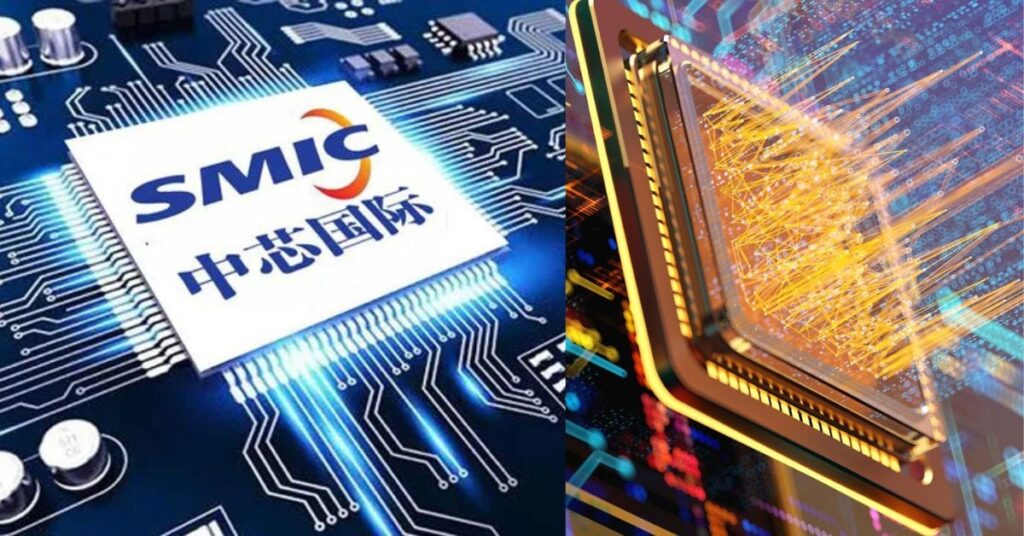
China Unveils AI Breakthrough at Global Summit
China has unveiled a domestically engineered AI chip that could rival or surpass NVIDIA’s most advanced 4nm GPUs. The announcement at the ICC Global CEO Summit in Beijing marks a turning point in semiconductor strategy, favoring system-level integration over transistor miniaturization. Officials described it as a breakthrough toward technological self-reliance under U.S. export controls.
Revolutionary 3D Hybrid Bonding Approach
At the heart of this innovation lies a 14nm logic processor fused with 18nm DRAM through 3D hybrid bonding. This method directly connects compute and memory layers, drastically improving bandwidth while reducing latency. Delivering up to 120 teraflops of raw power at two TFLOPS per watt efficiency, it challenges NVIDIA’s A100 and approaches Blackwell-class performance.
Overcoming Export Barriers with Clever Engineering
Reports from Tom’s Hardware reveal that China’s focus on advanced packaging allows it to sidestep its ongoing restrictions on EUV lithography. By optimizing 3D architecture instead of chasing smaller nodes, China can maximize the potential of existing foundry lines. This strategy could help the nation maintain AI hardware competitiveness despite Western supply limitations.
Rethinking the Path to Performance
Wei Shaojun, vice chairman of the China Semiconductor Industry Association, explained that the new chip rejects the industry’s obsession with smaller process nodes. Instead, it emphasizes near-memory computing by stacking logic and DRAM dies. This architecture minimizes latency and energy waste, addressing the long-standing “memory wall” that limits AI workload scalability.
Boosting Efficiency Through Proximity Computing
By placing compute and memory elements in direct physical contact, the design drastically cuts data transfer delays. As a result, each watt of power delivers higher computational value than traditional GPU layouts. Experts believe this packaging-led performance model could redefine how AI accelerators are built, emphasizing integration over lithographic advancement.
Chinese Companies Building Software Independence
Wei also warned that dependence on NVIDIA’s CUDA software stack remains a strategic risk. Over the years, CUDA has locked developers into NVIDIA’s ecosystem, limiting global alternatives. In response, Chinese firms like Cambricon, Huawei, and Alibaba are developing independent platforms, such as NeuWare, that support major frameworks like TensorFlow and PyTorch.
A Step Toward Full-Stack Autonomy
The push for domestic software ecosystems aligns with China’s goal of establishing full-stack AI sovereignty. By integrating chip design, operating systems, and development tools under one umbrella, Chinese companies can reduce reliance on U.S. technology. Analysts view this as a direct response to tightening export bans that threaten long-term innovation capacity.
Questions About Scalability and Real-World Testing
Despite its bold specifications, independent performance verification remains pending. Manufacturing such hybrid-bonded chips at scale demands near-perfect alignment precision and advanced cooling systems. Furthermore, software compatibility will determine how effectively this chip trains or deploys large AI models, a critical factor if China aims to challenge NVIDIA’s dominance in practice.
A New Phase in the GPU Arms Race
China’s 14nm AI processor represents not just hardware progress but a strategic shift in semiconductor philosophy. While NVIDIA explores similar 3D-stacked architectures for its Blackwell lineup, China’s design suggests that packaging and efficiency, not just smaller transistors, will shape the next AI battlefield. The global GPU race has officially entered a new phase.
