



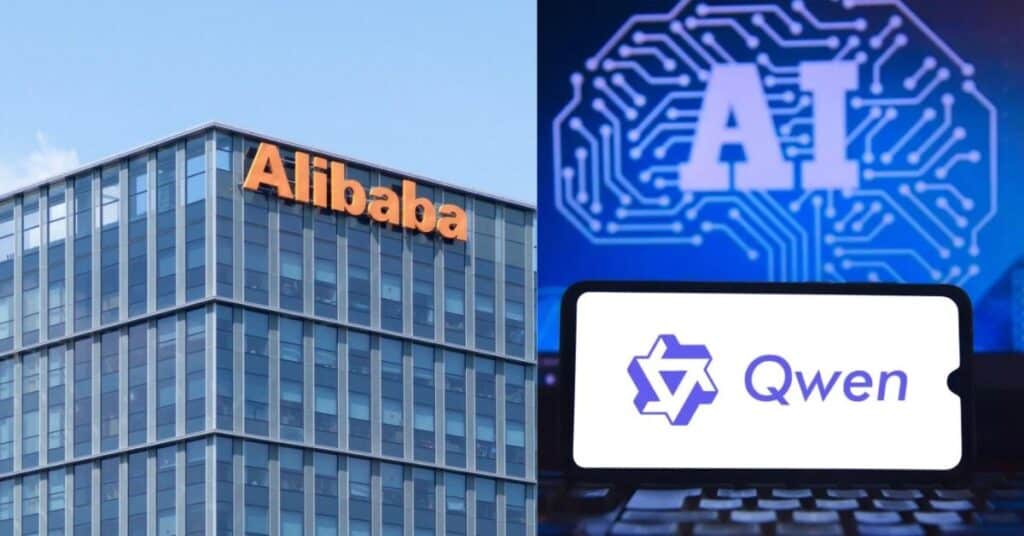
Alibaba’s recently launched Qwen AI app has made a spectacular market entry, surpassing 10 million downloads within just seven days of its public beta release. This rapid adoption rate outpaces early growth figures of competitors like ChatGPT, Sora, and DeepSeek, signaling strong consumer appetite for advanced AI tools in China.
The Qwen app embodies Alibaba’s shift in AI commercialisation strategy, offering free access rather than subscription-based services common among Western rivals such as OpenAI and Anthropic. This move integrates AI functionalities directly into Alibaba’s extensive ecosystem, including e-commerce and local business platforms, enhancing user convenience and engagement.
Designed as more than a chatbot, Qwen presents itself as a comprehensive AI assistant for both professional and personal use. Since its mid-November release on Apple’s App Store and Google Play, the app showcases “agentic AI” capabilities, executing complex tasks across diverse scenarios, which industry experts view as a significant advancement in AI utility
Alibaba’s foundation for Qwen’s success was laid in 2023, when the company open-sourced its Qwen model, now one of the world’s most widely adopted open-source large language models. The cumulative global downloads of the Qwen series exceed 600 million, reflecting its robust presence beyond consumer markets into enterprise deployments.
Enterprise uptake has accelerated with the introduction of the high-performance Qwen3-Max model. Silicon Valley leaders, including Airbnb and NVIDIA CEOs, publicly endorse Qwen’s practical business benefits, underscoring its global relevance and efficiency in reducing AI integration costs without licensing fees
Market analysts highlight the competitive advantages Alibaba gains from large user adoption, producing valuable feedback loops for continuous AI model refinement. The scale and capital resources available to Alibaba give it an edge over emerging AI startups that rely on subscription fees, potentially reshaping the AI marketplace dynamics.
The app’s launch arrives amid intensified US-China technology competition. Concerns about Alibaba’s rapid advancements and alleged military ties have surfaced, complicating multinational corporations’ AI procurement strategies. However, Alibaba denies such allegations, emphasizing the commercial and consumer focus of its AI developments.
For enterprise leaders, Qwen’s trajectory signifies a shift in AI deployment strategies. Open-source models now rival proprietary counterparts, and ecosystem integration delivers superior immediate value. The divide between free-access and subscription-based AI models will likely deepen, requiring businesses to assess total costs and data governance carefully
Alibaba plans to expand Qwen’s capabilities further, embedding AI functionalities into shopping, travel booking, and productivity tools, gradually evolving it into a fully autonomous AI agent. This vision supports Alibaba’s ambition to establish Qwen as a national-level AI application, influencing global AI infrastructure trends.
In summary, Alibaba’s Qwen app not only challenges established AI subscription models but also sets new benchmarks in user acquisition and enterprise endorsement. Its success reflects broader shifts in the AI landscape, underscoring how innovative business models combined with integrated ecosystems can reshape competitive advantages in the global AI race
