



Alibaba’s latest innovation marks a bold step into the AI-driven consumer electronics space. The company officially launched its Quark AI Glasses on Thursday, entering a fast-evolving market where global players like Meta and Apple are already exploring augmented intelligence wearables. The release highlights Alibaba’s ambition to merge advanced technology with daily lifestyle use cases.
The Quark AI Glasses come in two models — the premium S1 priced at 3,799 yuan ($536) and the more affordable G1 at 1,899 yuan ($268). The S1 version offers a superior display and enhanced lens functionality, aiming to provide an immersive visual experience for both professional and casual users across multiple applications.
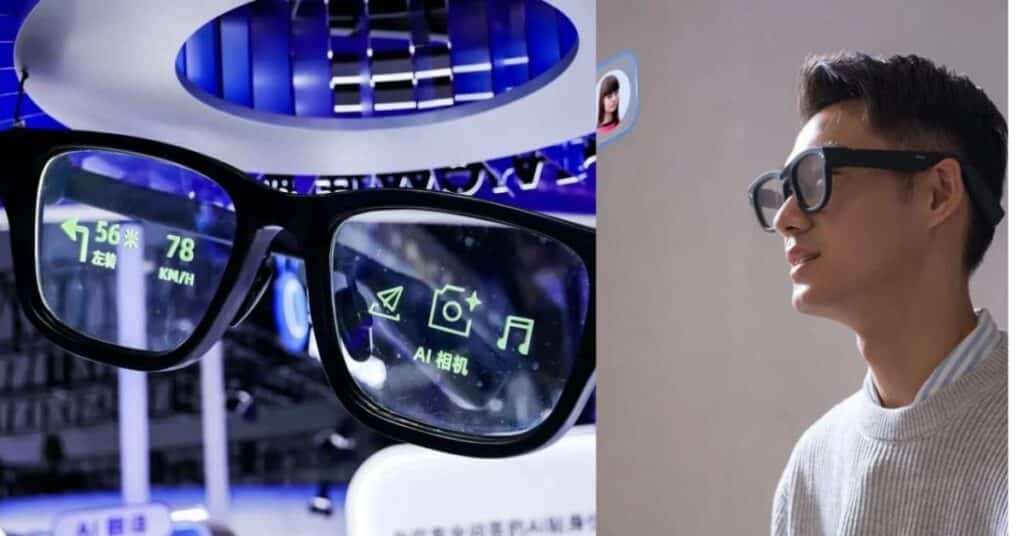
Alibaba has equipped the smart glasses with its proprietary Qwen AI model, capable of performing tasks such as voice-activated prompts, real-time translations, and AI-generated summaries. The integration with Alibaba’s Qwen app allows seamless synchronization, enabling users to ask questions, draft notes, and even browse products hands-free, powered by AI intelligence.
Designed for on-the-go utility, the Quark AI Glasses feature embedded cameras within the frames, allowing users to capture images and fetch contextual information instantly. For example, pointing the camera at a product automatically retrieves its price and details from Taobao, Alibaba’s flagship e-commerce platform, bridging the online and offline shopping experience.
Beyond productivity, Alibaba’s wearable promises to redefine how consumers interact with digital ecosystems. The device can translate foreign languages in real time, capture meeting highlights through voice commands, and display visual data directly on the lens display. This combination of practicality and innovation reflects Alibaba’s focus on broader consumer integration of artificial intelligence.
The launch closely follows Meta’s September debut of its $799 Ray-Ban Display glasses, intensifying competition in the emerging smart eyewear sector. While Meta focuses on gesture-based controls and immersive display functions, Alibaba’s strategy leans toward affordability and integration with its existing ecosystem of AI and cloud services.
According to market research firm Omdia, global shipments of AI-powered glasses could surpass 10 million units by 2026, nearly doubling from 2025. With domestic competitors like Xiaomi and Xreal also pushing into the segment, Alibaba’s entry signals that China’s tech leaders are determined to claim a substantial share of the next big wearable revolution.
